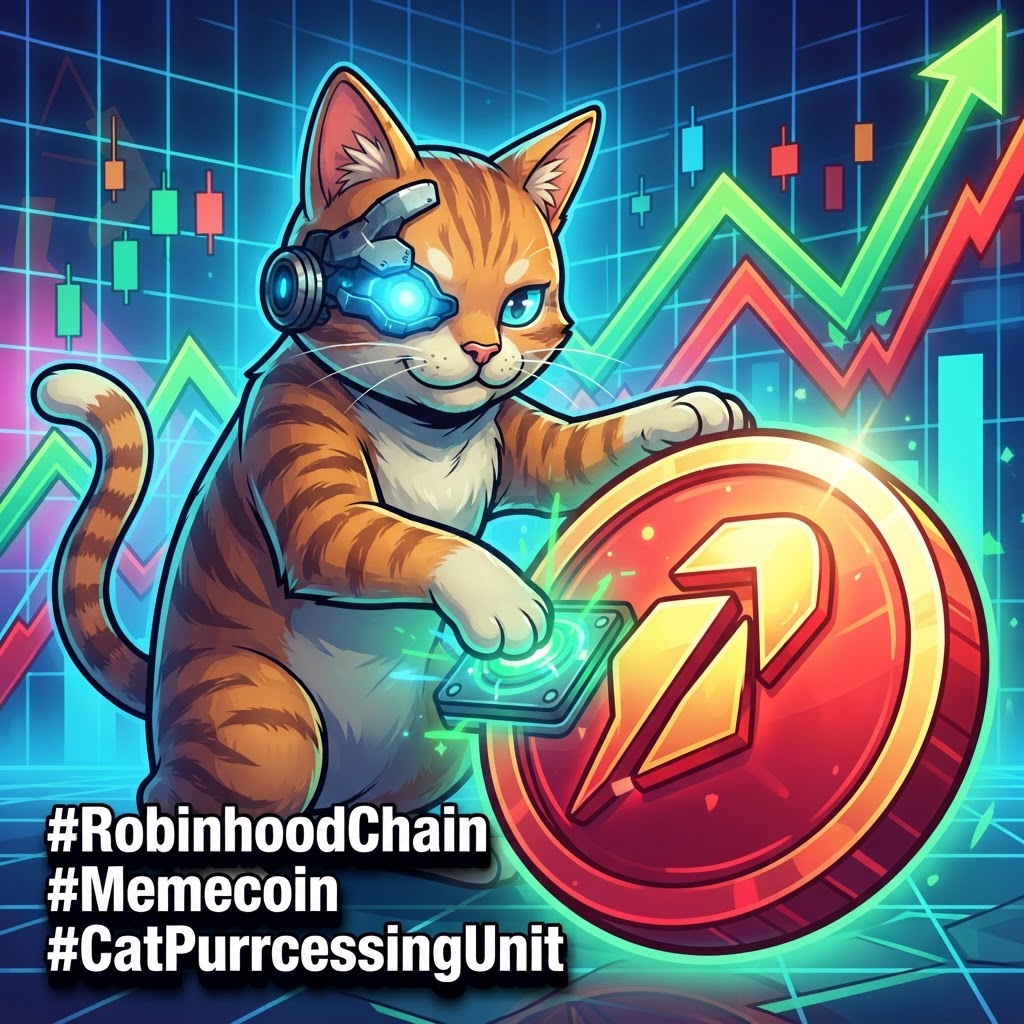
The launch of the Robinhood Chain has transformed the landscape for onchain finance, blending the promise of regulated real-world assets with the high-octane energy of speculative memecoin trading. While the network was architected to facilitate tokenized stocks and institutional lending, the community has quickly carved out a niche for playful, cat-themed assets that capture the attention of retail participants. Among these, the Cat Purrcessing Unit (CPU) has surfaced as a notable example of the creative, community-led projects currently vying for liquidity on the new Layer 2 infrastructure.
The Rise of Community-Driven Assets
Robinhood Chain's rapid adoption has been fueled by a unique mix of traditional financial utility and viral internet culture. While the platform's primary mission involves bringing equities onchain, the low-fee environment and seamless user experience have made it a natural playground for memecoin enthusiasts. These tokens often leverage the historical lore of the Robinhood brand, creating a sense of shared identity among early adopters who are eager to participate in the chain's growth phase.
- Memecoins often serve as the initial liquidity magnets for new blockchain networks.
- Community engagement frequently centers on tokens that reference the platform's internal history or branding.
- Speculative volume on these assets can often dwarf the activity seen in more structured financial products during the early stages of a network's lifecycle.
The tension between institutional-grade real-world assets and the viral nature of memecoins defines the current character of the Robinhood Chain, proving that community narratives often move faster than traditional financial adoption.
Navigating the Robinhood Chain Landscape
For those exploring the ecosystem, it is essential to distinguish between the network's core infrastructure and the volatile assets that populate its decentralized exchanges. While the chain supports sophisticated tools like tokenized stocks and perpetual futures, the memecoin sector remains highly unpredictable. Investors should approach these assets with caution, as the market dynamics for community tokens are driven by sentiment rather than the underlying financial performance of the brokerage itself.
Understanding the technical requirements for interacting with the chain is also vital for participants. Running a full node on the network requires significant hardware, including a modern multi-core CPU and substantial NVMe SSD storage, reflecting the chain's focus on high-performance financial services. As the ecosystem continues to evolve, the interplay between these robust technical foundations and the lighthearted nature of projects like CPU will likely remain a central theme for users and developers alike.